
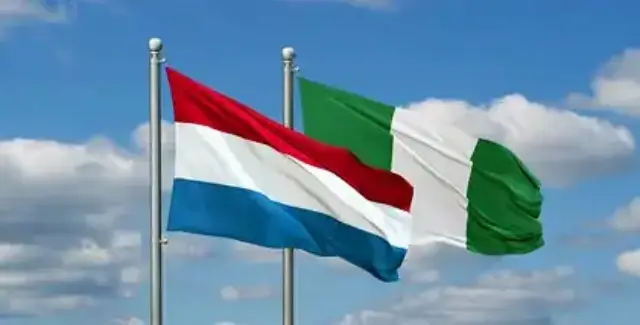
Why Nigerians choose the Netherlands
The Netherlands is a practical destination for Nigerians who want to study in English, take skilled work with a recognised sponsor, marry, or join family already living there. English is widely used in universities and in many international workplaces, which is why Nigerians often look here before they look at countries where you cannot study or work without the local language from day one. The country also has a one-year orientation permit after eligible study, a highly skilled migrant route through recognised employers, and a civil-status system that many people use for marriage and family residence.
It is not a cheap or automatic move, because housing is scarce and jobs that can sponsor a residence permit are competitive. Dutch still matters for many roles, for some family applications, and for long-term stay. As of 2026, CBS-based figures put about 22,500 people in the Netherlands with a Nigerian background, including people born in Nigeria and people born in the Netherlands to Nigerian parents, and about 8,500 residents with Nigerian nationality. The largest numbers are in Noord-Holland and Zuid-Holland, especially Amsterdam, The Hague and Rotterdam.
Relocation is not one visa, so start with why you are going, then the country rules, then the Nigerian documents that apply to that case. If you have been admitted to a Dutch university or university of applied sciences, the school is normally the immigration sponsor. If you have a job offer, the employer must usually be a recognised sponsor and the salary must meet the IND amount for your category. If you are joining a spouse or child, the sponsor’s income and the relationship evidence decide the application. Asylum and protection are a separate process, and they should not be treated as a study or work shortcut.
Antarch Consulting does not issue visas and does not make immigration decisions. Confirm current figures on ind.nl before you pay anyone. The country hub is Netherlands for Nigerians. If you are still comparing study, work and family options, use Pathway Finder.
Study in the Netherlands as a Nigerian
Only a recognised Dutch educational institution can apply to the IND for your student residence permit, which means you do not file that application yourself. The school must stay recognised, and it monitors whether you make enough academic progress each year. If you lose admission or fail the progress rules, the residence basis can fall away.
You must show living money as well as tuition, and the IND study norm does not include school fees. For 2026, the published monthly amount for a university or HBO programme is €1,130.77, so for 12 months that is €13,569.24, plus tuition. For MBO the 2026 monthly amount is €928.58. The school will tell you whether to put the money in your own account, transfer it to the institution, or use a sponsor. Financial documents must be in Dutch, English, German or French. Ask the school which Nigerian academic records it wants, rather than authenticating every certificate by default, and do not assume a Dutch embassy stamp is required after the Nigerian Ministry of Foreign Affairs has authenticated a document.
Nigerian students with a study permit may work up to 16 hours a week during the academic year, or full time in June, July and August, but the employer, not the student, must obtain a work permit (TWV) from UWV before you start. Working more hours than allowed, or working without a TWV, can affect the employer and your residence permit. A curriculum internship arranged through the school follows different paperwork, so do not treat a part-time job as if it were a highly skilled migrant permit.
English-taught programmes are widely available, including at Delft University of Technology, Leiden University, Erasmus University Rotterdam, and universities of applied sciences. Confirm accreditation, tuition, housing, and whether the qualification can support an orientation year after graduation. Official study information is on the IND student residence page and the IND study income page.
Work in the Netherlands: highly skilled migrant, orientation year and job search
The highly skilled migrant permit (kennismigrant) is the main skilled-work route for Nigerians, and only an employer recognised by the IND can apply. Check the employer on the live IND register before you resign in Nigeria or pay an agent. The salary must be market-level, fixed in the contract, and paid into an account in your name.
From 1 January 2026, the IND gross monthly salary amounts, without holiday allowance, are €5,942 for a highly skilled migrant aged 30 and over, €4,357 if you are under 30, and €3,122 on the reduced criterion for recent graduates and orientation-year cases. The European Blue Card amounts for 2026 are €5,942, or €4,754 on the reduced criterion. These figures change, so confirm them on the IND highly skilled migrant page and the IND required-amounts notice before you sign.
| Category | Gross monthly amount (2026, without holiday allowance) |
|---|---|
| Highly skilled migrant, aged 30 and over | €5,942 |
| Highly skilled migrant, under 30 | €4,357 |
| Reduced criterion (recent graduates / orientation year) | €3,122 |
| European Blue Card | €5,942 |
| European Blue Card, reduced criterion | €4,754 |
The orientation year (zoekjaar) is a one-year residence permit to look for work or start a business after study, a PhD, or research, and you apply within three years of graduation or completing the research. A Dutch accredited bachelor’s or master’s degree can qualify, but a foreign bachelor’s degree on its own does not. A foreign master’s, post-master’s or PhD can qualify if the institution was a designated top-200 university on the relevant ranking lists on your graduation date. During the orientation year you have free access to the labour market, so you do not need a TWV and there is no salary threshold for that year. If you then take highly skilled work within three years of graduation, the reduced salary criterion of €3,122 a month (2026) may apply. Official conditions are on the IND orientation year page.
IT, engineering, healthcare, data and logistics roles are often advertised to international candidates, but that does not mean every vacancy can sponsor a permit. Search LinkedIn, Indeed.nl, IamExpat Jobs, Glassdoor, EURES and UWV, then confirm the employer is a recognised sponsor. Dutch workplaces tend to be punctual and direct, and many international teams work in English, but broader employment, municipal letters and long-term residence still go more smoothly if you learn Dutch.
Family reunification and marriage in the Netherlands
Marrying in a Dutch town hall does not by itself give you residence, because the civil marriage is one process but the IND partner or family application is another. Family residence for a spouse or child depends on the sponsor’s status and income. Highly skilled migrants can often include family in the same recognised-sponsor process, subject to IND rules, whereas students and some other temporary permits face tighter conditions. From 1 January to 30 June 2026, the IND published a required amount of €2,294.40 gross per month without holiday allowance for married or cohabiting couples under the minimum-wage tables, but that figure does not apply to every permit type, so confirm the amount that applies to your sponsor on ind.nl. Asylum family reunification is a different procedure, and from 12 June 2026 the two-status system changed which family members can join an asylum permit holder.
Although civil marriages are registered by the local municipality (gemeente) where the marriage takes place, it is important to seek clarification from that specific gemeente about its own requirements, because these may sometimes differ from one gemeente to another. Typical items include valid passports, proof of lawful stay if you already live in the Netherlands, an NPC birth certificate or NPC Birth Attestation Certificate, evidence that you are legally free to marry, and proof of address. English-language Nigerian documents do not need translation for use in the Netherlands, but documents in other languages need a sworn translation. For proof that you are unmarried, Dutch authorities often want more than one Nigerian record, and in practice this can include a single status affidavit (bachelorhood or spinsterhood) and a marital-status attestation. See Antarch Consulting’s guide to authentication of a Nigerian single status certificate. Those civil documents should be authenticated at the Ministry of Foreign Affairs before you submit them, as explained in the next section, and the Netherlands-specific legalization rule is set out in Nigerian Document Legalization for the Netherlands.
Give the municipality notice of the intended marriage, submit the documents, and wait for it to confirm the ceremony. Ceremony fees vary by municipality and by weekday or weekend slot, so some weekday morning ceremonies are inexpensive while weekend ceremonies cost more. Ask the gemeente for its current list.
How to authenticate Nigerian documents for use in the Netherlands
Where a Dutch municipality, the IND, a school or another authority asks for a legalised Nigerian document, the Nigerian step is authentication by the Ministry of Foreign Affairs in Abuja. Authentication in this context means the Ministry of Foreign Affairs stamps and signs the document, usually on the back, so that Dutch authorities will consider it validly issued in Nigeria. Without those stamps and signatures, the document may not be accepted for your application.
The Netherlands does not add a Dutch embassy legalization stamp after that. The official Dutch government page is Legalisation of documents from Nigeria. For the full Netherlands-specific process, including which civil documents are covered and what the receiving Dutch authority may still check, see Antarch Consulting’s guide to Nigerian Document Legalization for the Netherlands.
This process of authentication is sometimes referred to as apostille, and you hear some people say they were asked to apostille a birth certificate. That is not entirely correct, because even though Ministry of Foreign Affairs authentication performs the same job as apostille, which is to make the document issued in your country valid for use abroad, Nigeria does not issue apostille in itself. Nigeria is not a member of apostille countries. The equivalent in Nigeria is authentication, whereby the Ministry of Foreign Affairs signs and stamps the back of the birth certificate, Birth Attestation Certificate, marriage certificate or single status document.
Most Dutch offices want an NPC birth certificate or an NPC Birth Attestation Certificate, not a hospital card or local government birth certificate. The Ministry of Foreign Affairs can still stamp those older certificates, but many Dutch authorities will still reject them and tell you to process the NPC birth certificate or Birth Attestation Certificate instead. In Antarch Consulting’s working practice, the original of that NPC birth certificate, Birth Attestation Certificate, marriage certificate or single status document is what the Ministry of Foreign Affairs should stamp and sign. You still make photocopies of the authenticated back and submit those together with the original, but you do not have a photocopy authenticated in place of the original.
Do not authenticate every academic record by default. Ask the school or employer which certificates and transcripts it wants, and whether Federal Ministry of Education attestation is required before Ministry of Foreign Affairs authentication. Those stamps confirm the Nigerian signature and seal, but they do not mean the Ministry has re-investigated the facts inside the document, so if a date of birth is wrong, authentication will not correct it. The municipality, IND or school may still verify the contents.
The general Ministry of Foreign Affairs process is in How to authenticate documents in Nigeria. For NPC birth certificates and Birth Attestation Certificates, see authentication of a Nigerian birth certificate.
Housing, Banking and Healthcare
The Netherlands is expensive by West African standards, especially rent in Amsterdam, Rotterdam, Utrecht and The Hague, so a realistic monthly budget for one person in a major city, including rent, is often €1,800 to €2,400. The old habit of quoting €1,200 to €1,600 as a full monthly cost usually leaves rent out or understates it.
| Expense | Typical monthly range in a large city |
|---|---|
| Rent (1-bed apartment) | €900 – €1,300 |
| Utilities (electricity, water, gas) | €150 – €200 |
| Health insurance | €120 – €140 |
| Groceries | €250 – €350 |
| Transport (OV-chipkaart) | €100 – €150 |
| Mobile, leisure and incidentals | €150 – €200 |
Sharing a house, living in a smaller city such as Eindhoven, Groningen or Maastricht, or using university housing can cut rent, but you should still register early with housing corporations and use more than one rental website because competition for rooms is strong. Initial arrival money for a worker often includes a deposit, first month’s rent, and basic set-up, so several thousand euros is a common planning range. Students must still meet the IND study norm plus tuition, which is a larger number than a short arrival budget.
After you register with the municipality you receive a BSN (burgerservicenummer). Dutch banks such as ING, ABN AMRO and bunq commonly ask for proof of address, your BSN and your residence permit. Many Nigerians also use Revolut for transfers, in the way people in Nigeria use apps such as Opay or Moniepoint, but it does not replace a Dutch account for every salary, rent or IND purpose, so ask your employer and landlord what they will accept.
Health insurance is mandatory for residents. Basic insurance is often about €120 to €140 a month, and depending on income you may receive a healthcare allowance (zorgtoeslag). Compare policies, and do not remain uninsured.
Starting a business in the Netherlands
Registering a sole proprietorship (eenmanszaak) at the Chamber of Commerce (KVK) is not a residence permit, so you still need a lawful basis to live in the Netherlands. The IND self-employed and startup routes have their own tests, and an innovative plan, funding and added value to the Dutch economy are typical themes. Check the current IND self-employed conditions rather than treating KVK registration as immigration.
If you are already allowed to work, KVK registration, a BTW number, and Dutch tax filing follow the ordinary business rules. Standard VAT on most goods and services is 21%, and income tax is progressive. Deductions such as zelfstandigenaftrek may apply if you meet the hours and conditions, so confirm current rates with Belastingdienst. Online banks and accounting tools can simplify bookkeeping, but they do not replace the residence-permit question.
Community and daily life
Most Dutch people speak English well, but learning Dutch still helps with housing, municipal letters, wider jobs and integration, and municipalities often point residents to language courses. Winter is wet, windy and dark compared with Nigeria, so buy a proper coat and waterproof shoes. That is ordinary preparation, not a crisis.
Nigerians in the Netherlands meet through student groups, Igbo, Yoruba and pan-Nigerian associations, professional networks, cultural events around the Nigerian embassy in The Hague, and churches. The RCCG Netherlands Mission has parishes in several cities, and Winners Chapel and Christ Embassy also have congregations in the larger cities. Amsterdam, Rotterdam, The Hague and Utrecht have more jobs and a larger Nigerian presence, and also higher rent, while Eindhoven, Groningen and Maastricht can be cheaper. Choose the city that matches the school or the employer.
Frequently asked questions
How many Nigerians live in the Netherlands? There is no single official headcount that matches every definition, but in 2026 about 22,500 residents had a Nigerian background and about 8,500 held Nigerian nationality, based on CBS-derived figures. Amsterdam, The Hague, Rotterdam and Utrecht have the largest concentrations.
Can Nigerians work in the Netherlands without a degree? Some jobs exist without a degree, including parts of hospitality and logistics, but most residence routes that Nigerians actually use (highly skilled migrant, orientation year, and many study-to-work paths) are built around higher education or a recognised sponsor and a salary threshold, so a job offer is not a permit.
How much money do I need to show as a student? For 2026, HBO and university students must show the IND study norm of €1,130.77 a month for 12 months (€13,569.24), plus tuition. That amount is living money only, so confirm the format your school accepts.
Can Nigerian students work while studying? Yes, within the study-permit rules: up to 16 hours a week in term time, or full time in June, July and August, and only if the employer has a TWV. Check IND and UWV before you accept a job.
How long does a Netherlands residence application take? The school or recognised sponsor usually files the IND application, and decision times vary by permit type and by how complete the file is, so do not treat “2 to 4 weeks” or “4 to 6 weeks” as a guarantee. Nigerian document authentication in Abuja is a separate timetable.
Do I need to speak Dutch? Not always on day one, especially in English-taught programmes and some international companies, but Dutch improves job options, municipal life and some family-residence conditions.
Do Nigerian documents need Dutch embassy legalization? No. Where legalization is required, the Nigerian Ministry of Foreign Affairs authenticates the document, and the Dutch embassy in Nigeria does not add another stamp. The municipality, IND or school still decides which document it wants, and it may still verify the contents. The dedicated guide is Nigerian Document Legalization for the Netherlands.
Can I bring my spouse and children? Often yes on a highly skilled migrant permit, if income and relationship evidence meet IND rules, but student and other temporary permits are stricter, and marriage in the Netherlands does not replace the family-residence application.
What salaries do Nigerians earn? Pay depends on the role and the permit. For 2026, a highly skilled migrant aged 30 or over must earn at least €5,942 gross a month without holiday allowance, under 30 the amount is €4,357, and recent graduates on the reduced criterion must earn at least €3,122. Actual offers can be higher, and entry-level work outside these schemes is a different legal route.
Is healthcare expensive? Basic insurance is mandatory and often about €120 to €140 a month, though zorgtoeslag can reduce the cost if your income qualifies.
Can I stay after I graduate? Eligible graduates can apply for the orientation year and spend one year looking for work or starting a business without employer sponsorship, but staying after that usually means a qualifying job with a recognised sponsor.
If you need the Nigerian side of a Netherlands application, Antarch Consulting can provide guidance for the processing of NPC Birth Attestation Certificates and single status (bachelorhood and spinsterhood) certificates, and for authentication at the Ministry of Foreign Affairs in Abuja. We can also advise which documents the Dutch authority has actually asked for, so you do not authenticate the wrong set. Contact Antarch Consulting.