
Understanding Document Authentication in Nigeria
If you are preparing Nigerian documents for use abroad, you may be asked to authenticate your birth certificate for a family reunification application, your degree certificate for admission to a foreign university, or your marriage certificate for a spouse visa. In many cases, the instructions simply say that the document must be authenticated or legalized, leaving you to find out where to go and what to do.
The procedure depends on the document and the country where you intend to use it. An academic certificate, for example, requires certification by the Federal Ministry of Education before Ministry of Foreign Affairs authentication, while a birth certificate must first be in the appropriate National Population Commission format. Some countries also require embassy legalization after authentication, whereas others do not.
This guide explains how to authenticate documents in Nigeria, the requirements for common documents, and the country-specific instructions you should check before submitting an application.
What Document Authentication in Nigeria Means
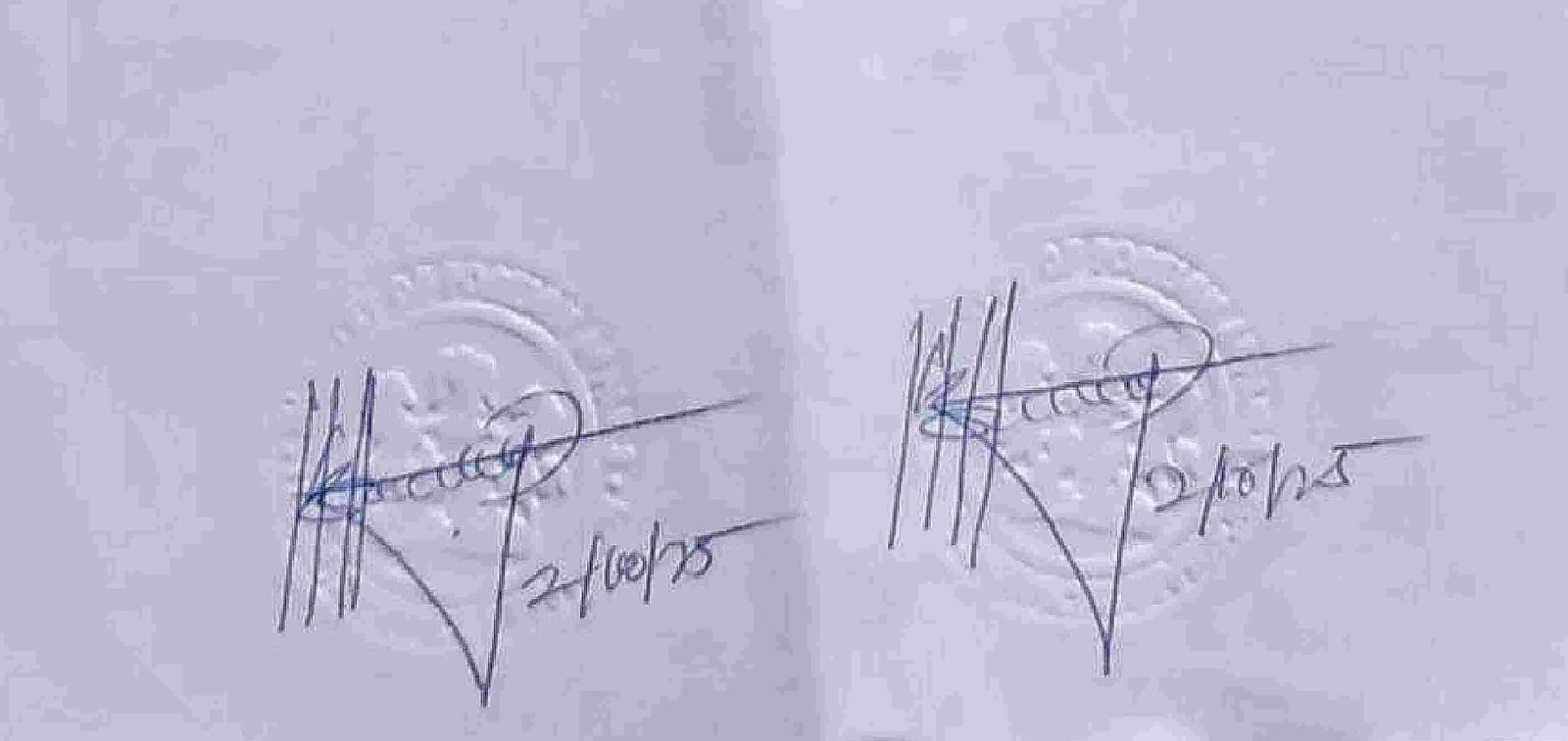
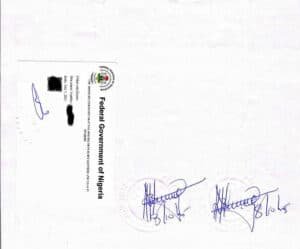
Document authentication is the process through which the Ministry of Foreign Affairs certifies a Nigerian document by signing and stamping it for use abroad. The Ministry checks the relevant official signature, seal or issuing authority before applying its own authentication. This gives the foreign embassy, school, employer or government office receiving the document a basis for recognizing its Nigerian certification.
Authentication is sometimes called attestation. However, it is different from notarization, which may involve a notary public witnessing a signature, taking a sworn declaration or certifying a copy after sighting the original. A notary’s stamp does not replace Ministry of Foreign Affairs authentication, and an authenticated document does not automatically satisfy a separate requirement for notarization.
Embassy legalization is a further step undertaken by the embassy or consulate of the country where the document will be used. Where this is required, the embassy certifies the Ministry of Foreign Affairs signature or seal after the Nigerian authentication has been completed.
Can you get an apostille in Nigeria?
Nigeria is not a party to the Hague Apostille Convention and does not issue apostilles under that Convention. If a foreign institution asks you for an apostille on a Nigerian document, explain that Nigeria uses Ministry of Foreign Affairs authentication and ask which additional steps it requires for documents from a country outside the Convention.
The destination country’s instructions determine whether embassy legalization is necessary. For example, Nigerian documents for use in the Netherlands generally require Nigerian Ministry of Foreign Affairs authentication without a further Dutch embassy legalization step. Germany uses document verification when requested by the relevant German authority, rather than embassy legalization of Nigerian public documents.
Step-by-Step Process to Authenticate Documents in Nigeria
Before starting, obtain the written requirements from the embassy or the institution receiving your document. Check whether it wants the original or a certified true copy, whether notarization is necessary, and whether the document or its authentication must be within a specified period. An ordinary photocopy is not the same as a certified true copy.
You should also check that your names, dates and other personal details are correct and consistent across the documents you will submit. If there is a discrepancy, deal with it before authentication rather than assuming that a government stamp will resolve it.
- Complete any preliminary certification. Academic documents require Federal Ministry of Education certification before Ministry of Foreign Affairs authentication. Other documents may need verification by their issuing authority or supporting documents, as explained below.
- Notarize the document if required. Many embassies do not require notarization for most civil, personal and academic documents. Where it is required, arrange it before proceeding. For example, China-bound police character certificates require notarization as part of the preparation for legalization. Check the current instructions for your particular document rather than applying the same rule to every certificate.
- Start the Ministry of Foreign Affairs application. Use the Ministry’s Advanced Consular Services portal and follow its current instructions for the application, supporting documents, payment and physical vetting. Keep your application details and the Remita payment receipt.
- Present the documents for authentication. Follow the submission or appointment instructions given for your application. The Ministry of Foreign Affairs Legal Services Division in Abuja handles document authentication. Starting online does not remove the requirement to present originals or accepted certified true copies where these are requested.
- Collect and check the authenticated documents. Keep any submission acknowledgement and follow the collection instructions. Check that every document submitted for authentication has been returned and that the required signatures and stamps have been applied. Keep the authentication receipt with the documents, especially where the embassy requires it.
- Complete embassy legalization where necessary. Once Ministry of Foreign Affairs authentication is complete, follow the destination embassy’s instructions for legalization, translation and any supporting documents.
How long does authentication take?
The time required depends on the document, any verification needed and the volume of applications being processed. Academic documents can be delayed while the awarding institution sends the required transcript, while divorce certificates usually take longer because the court-issued documents must be verified. Allow time for these preliminary checks and any later embassy appointment when planning around an admission, visa or travel deadline.
Specific Requirements for Common Nigerian Documents
The general process is similar, but preparing the right document is often what determines whether an application can proceed. Below are the main requirements for documents commonly submitted for authentication.
Authentication of Birth Certificate or NPC Birth Attestation Certificate
For the usual authentication route, you need a birth certificate or Birth Attestation Certificate issued by the National Population Commission. If you have only a hospital birth certificate, a local government certificate or a baptismal certificate, obtain the appropriate NPC certificate before submitting your documents for use abroad.
For adults aged 18 and above, the NPC issues a Birth Attestation Certificate rather than the standard birth certificate issued for children. The NPC Birth Attestation Certificate serves the same purpose as a birth certificate and is accepted for use abroad when properly authenticated. Modern NPC certificates include a QR code for verification.
A High Court declaration of birth or age affidavit may be required when obtaining an NPC Birth Attestation Certificate. Keep this affidavit, as some embassies also require it alongside the NPC certificate. The affidavit and the NPC certificate are separate documents, even though the affidavit may support the application for the certificate.
If your birth certificate was issued outside Nigeria, its authentication normally has to follow the procedure in the country that issued it. Nigerian Ministry of Foreign Affairs authentication is for Nigerian documents.
Our guide on how to authenticate birth certificates explains the NPC requirements and the preparation needed for different destinations.
Authentication of Marriage Certificate, Divorce Certificate and Single Status Affidavit
A marriage certificate must have been issued by a competent marriage registry or other legally authorized authority. Where the marriage was conducted under customary law, additional documentation may be needed to establish the marriage and its legal recognition. See our guide on how to authenticate marriage certificates for further explanation.
Divorce certificates and related court documents take longer to authenticate because the Ministry must verify that they were properly issued by the court. If you need to prove that a marriage has legally ended, make sure you have the final court document required by the receiving authority, rather than an application for divorce or an interim order.
A Single Status Affidavit is a sworn declaration that you are not currently married. It should be properly sworn before a commissioner for oaths at a competent High Court and prepared for the purpose for which it is required, such as a marriage application abroad. Confirm the receiving authority’s wording and supporting-document requirements before having the affidavit prepared.
Authentication of Police Character Certificate
A Police Character Certificate, often called a police clearance certificate, is issued by the Nigeria Police Force and is commonly required for immigration, employment or residence applications abroad. Obtain the current digital certificate, which includes your identifying photograph and a QR code for verification.
Applications are made through the Police Specialized Services Automation Project (POSSAP) portal at possap.gov.ng, with fingerprint or biometric requirements handled according to the police instructions for your application. Applicants outside Nigeria can begin the application online and follow the arrangements provided for submitting their fingerprints.
After obtaining the certificate, complete notarization where the destination requires it, followed by Ministry of Foreign Affairs authentication and any required embassy legalization. Check the receiving authority’s validity period before applying, since police character certificates are often required to have been issued recently.
Authentication of a Nigerian International Passport Data Page
Some foreign authorities request an authenticated copy of your Nigerian international passport data page as proof of identity. Prepare a clear copy showing the photograph and all personal details, and confirm whether the authority requires a certified true copy or notarization before authentication.
This procedure concerns the passport data page submitted for that purpose. It does not replace the passport itself or change its validity.
Authentication of Academic Certificates and Education Documents
Academic documents must first be certified by the Federal Ministry of Education before they are submitted to the Ministry of Foreign Affairs. This applies to Nigerian qualifications such as WAEC and NECO results, degree certificates, HND and ND certificates, and other education documents requiring authentication for use abroad.
The Ministry of Education online application
The Federal Ministry of Education processes applications through its Education Support Services portal. The Ministry announced in April 2026 that new authentication and evaluation applications would be handled online.
For a Nigerian qualification intended for use abroad, choose the authentication service, enter the qualification details, make the prescribed payment and upload the requested documents. Evaluation is a different service used to assess foreign qualifications for Nigerian equivalence, so select the service that matches your purpose.
For a degree, HND, ND or another higher-education qualification, request your official transcript from the awarding institution and give it your application number. The institution must send the transcript directly from its official institutional email address to the address specified for the application. A transcript forwarded by the applicant or sent from a personal email address does not meet this requirement.
WAEC and NECO results are verified through the examination bodies’ systems. Have a valid verification PIN or scratch-card detail ready where the application requires it, and make sure the documents uploaded match the pages declared in your application.
What you still need to arrange
The Ministry of Education application is online, but you still have to request the transcript, resolve any discrepancy in your details and respond to requests for further information. For example, uploading a degree certificate does not remove the need for your university to send the transcript directly.
Once Ministry of Education certification is complete, proceed with Ministry of Foreign Affairs authentication and any embassy legalization required for your destination. These later stages are separate from the Education Support Services application.
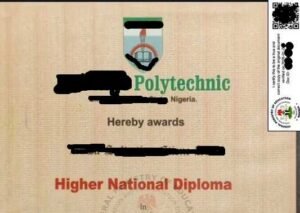
The sample above comes from an Antarch Consulting application and shows Ministry of Education certification on a copy of an academic certificate, with a document number and QR code. The ESS portal provides a verification facility for issued documents. Follow the instructions for your completed application rather than assuming that every certificate will be returned in the same format.
The Nigeria Education Repository and Databank (NERD) is a separate education verification system. A QR code or credential number associated with that system does not replace the Ministry of Education authentication required for your application.
Authentication of Other Nigerian Documents
Depending on the purpose, you may also be asked to authenticate:
- Corporate Affairs Commission certificates and business registration documents
- Contracts and commercial agreements
- Court affidavits and powers of attorney
- Letters of sponsorship
- Medical reports and health certificates
- Declarations of assets, income statements and bank documents
- Professional qualifications and trade certificates
The preparation depends on who issued the document and what the receiving authority requires. For example, a privately signed power of attorney may require notarization, while a certificate issued by a government agency may need confirmation from that agency. Get the requirements for the particular document before arranging authentication.
Embassy Requirements to Check Before Submission
A document can be properly authenticated by the Ministry of Foreign Affairs and still be returned by an embassy because a supporting document is missing. The embassy’s checklist therefore matters just as much as the authentication itself.
Keep the authentication receipt. Italy and South Korea require the Ministry of Foreign Affairs authentication receipt, including the Remita receipt, to be presented with the authenticated documents. Do not discard it once you have collected your certificates. For Italy, check the relevant consular office’s legalization instructions for the other documents needed for submission.
Check whether a Letter of Eligibility is required. Antarch Consulting has encountered this requirement when processing academic documents for the UAE, Poland, Austria and Bulgaria. The letter is issued by the Federal Ministry of Education and must complete the required authentication and legalization alongside the academic certificate. Obtain it where the embassy or receiving institution requests it for your qualification and purpose.
Confirm whether to submit originals or certified true copies. An embassy may accept an official certified copy while rejecting an ordinary photocopy. Ask this question before authentication, especially if you want to avoid placing stamps on your original academic certificate.
Allow for additional NPC verification where required. For Belgium-bound birth certificates, the procedure includes NPC verification through its online system and a verification token. A Birth Attestation Certificate may also need the accompanying declaration of age affidavit and the declarant’s identification. Prepare these supporting documents along with the NPC certificate.
Check notarization, translation and document age. China-bound documents may require notarization and supporting identification or an application letter. Other destinations may require certified translations or documents authenticated within a specified period. Confirm when the translation should be made and which translator the receiving authority accepts.
For more detailed country guidance, see our document authentication and legalization routes page. You should also check the current embassy checklist and any separate instructions from the school, employer or government office receiving the document.
Arranging Authentication While Outside Nigeria
If you live abroad, you can begin the online stages from where you are and arrange assistance with the steps that require documents to be handled in Nigeria. Before sending originals, confirm which documents are needed, how they will be submitted and returned, and whether a representative needs an authorization letter or sworn affidavit.
For academic documents, contact your institution early to request the transcript. For civil documents, check that you have the correct certificate and any supporting affidavit before arranging delivery. Preparing these properly helps avoid having to send another document after the application has already started.
Professional Document Authentication Services in Nigeria
Antarch Consulting assists clients in Nigeria and abroad with preparing documents for Ministry of Education certification, Ministry of Foreign Affairs authentication and embassy legalization. Our assistance includes ESS applications, coordination of the transcript requirement and the submission and collection arrangements that apply to your destination.
If you need help, send us the document type, destination country and purpose, together with any checklist you have received. These details help us identify the procedure you need and the supporting documents to prepare. You can contact us to discuss your application.