

Understanding Document Authentication in Nigeria for 2026
Authentication of documents in Nigeria remains one of the most essential yet confusing processes for Nigerians planning to use their certificates abroad. Whether you need authenticated academic results for overseas universities, birth certificates for visa applications, marriage certificates for family reunification, or business documents for international partnerships, understanding the correct authentication procedures at the Ministry of Foreign Affairs in Abuja can save you months of delays and prevent costly application rejections.
This comprehensive guide explains everything you need to know to authenticate documents in Nigeria successfully in 2026, including recent procedural changes at the Ministry of Education, new digital verification systems, and embassy-specific requirements that can make or break your authentication process.
What Document Authentication in Nigeria Actually Means
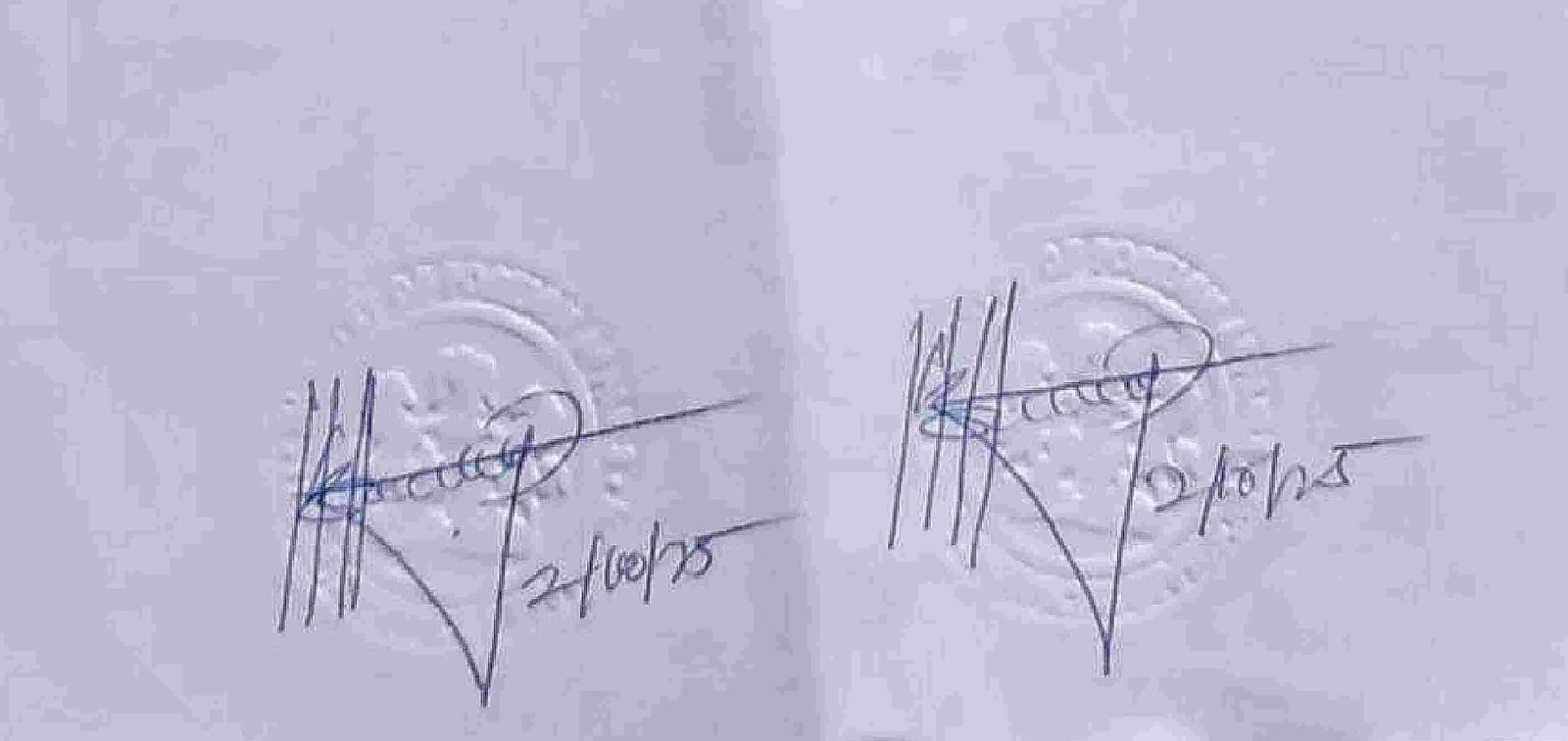
Authentication of documents in Nigeria is the official government certification process where the Federal Ministry of Foreign Affairs in Abuja examines your Nigerian documents or certificates and confirms they were genuinely issued by legitimate authorities. This endorsement as it were, essentially adds an official government seal and authorized signature to your documents, certifying their authenticity to foreign authorities and institutions that cannot independently verify Nigerian documents themselves. This makes such documents valid and acceptable for use abroad.
Nigeria is not a signatory to the Hague Apostille Convention, which means the apostille stamp is not issued here. Instead, authentication at the Ministry of Foreign Affairs in Abuja serves as Nigeria’s equivalent to apostille certification. After authentication by the Ministry of Foreign Affairs, most documents then require additional legalization at the embassy of your destination country before they can be used for official purposes abroad.
The authentication process confirms three critical elements: your document genuinely comes from the stated Nigerian issuing authority, the signatures and seals on the document are authentic and match official records, and the document content has not been altered or falsified after its original issuance.
Step-by-Step Process to Authenticate Documents in Nigeria
The general procedure to authenticate documents in Nigeria at the Federal Ministry of Foreign Affairs follows these core steps, though specific document types may require additional preliminary steps at other government ministries:
- Get a Notary Public to notarize your document if required by your destination embassy or country (for example, Chinese Embassy and Qatar Embassy typically require notarization, while most others do not). If notarization is not required, you can skip this step and proceed directly to the Ministry of Foreign Affairs.
- Take your document to the Ministry of Foreign Affairs headquarters in Abuja and report to the Legal Services Division (LSD). Complete the authentication application forms provided by LSD officers at their desks.
- Obtain the applicable official authentication fees for each document you need to authenticate. Authentication fees are calculated per page of each document. Generate a REMITA payment reference from the designated LSD officer and make payment at any major commercial bank in Nigeria to the government account provided.
- Return to the Legal Services Department at the Ministry of Foreign Affairs with your bank payment receipt. Deposit your proof of payment and receive an official acknowledgement slip issued by the ministry indicating your submission has been logged.
- Submit your document for authentication at the appropriate LSD desk based on document type. The officer will inform you when to return to collect your authenticated document.
Processing timelines at the Ministry of Foreign Affairs vary significantly depending on document type and the volume of submissions being handled at any given time. You may need to make multiple visits to the Ministry to check on your authentication status, so plan your timeline accordingly and avoid last-minute applications before travel or deadline dates.
Different documents require different levels of verification by the Ministry of Foreign Affairs before authentication can be completed, which affects how long the process takes from submission to collection.
Specific Requirements for Common Nigerian Documents
The Ministry of Foreign Affairs in Nigeria handles authentication requests for a wide range of documents, but each document type has specific prerequisites and verification procedures. Understanding these requirements before you begin the authentication process prevents delays and rejected submissions.
Authentication of Birth Certificate or Attestation of Birth
The Nigerian Ministry of Foreign Affairs will authenticate birth certificates only after confirming they were properly issued by the National Population Commission (NPC). Hospital birth certificates, local government certificates, and church baptismal records cannot be authenticated at the Ministry of Foreign Affairs regardless of their apparent legitimacy.
For adults aged 18 and above, the NPC issues Attestation Certificates (previously called Attestation of Birth Letters) rather than standard birth certificates. These attestation certificates carry exactly the same legal weight as birth certificates both domestically and internationally when properly authenticated. Modern NPC attestations now include embedded QR codes that enable instant digital verification by immigration authorities worldwide.
Birth certificates or attestations issued outside Nigeria for individuals born abroad cannot be authenticated by Nigeria’s Ministry of Foreign Affairs. You must authenticate foreign-issued birth documents in the country where they were originally issued.
Authentication of Marriage Certificate, Divorce Certificate, and Single Status Affidavit
The Ministry of Foreign Affairs will authenticate marriage certificates only after determining the marriage was properly contracted under Nigerian law and the certificate was issued by a competent registry or court. Customary marriage certificates from traditional ceremonies require additional documentation proving their legal recognition before authentication can proceed.
Authentication of divorce certificates by the Ministry of Foreign Affairs follows a particularly rigorous verification process that can be time-consuming compared to other documents. The Ministry must confirm the divorce certificate is authentic and was properly issued by a Nigerian court with jurisdiction to dissolve the marriage in question.
Single Status Affidavits are authenticated by the Ministry of Foreign Affairs after officers verify you properly deposed a legal affidavit before a commissioner for oaths at a competent High Court, affirming you are not currently in any marriage contracted under customary or statutory law in Nigeria.
Authentication of Police Character Certificate
The Police Character Certificate serves as Nigeria’s equivalent to certificates of good standing or police clearance certificates required by foreign countries. It certifies you have no criminal record and are not currently facing criminal investigation in Nigeria.
The Ministry of Foreign Affairs is the only Nigerian government body authorized to authenticate police character certificates for international use. Two types of police character certificates currently exist in Nigeria:
The old standard police character certificate comes in two pages – the main certificate page containing your information and a second page with your fingerprints and identification photograph. This format is being phased out but some embassies may still accept authenticated copies.
The new standard digital police character certificate is delivered via email as a single-page document bearing all your information, your identifying photograph, and a verifiable QR code that enables instant authentication checks. This digital format is now the preferred standard and is specifically required for Nigerian diaspora applicants who live abroad and need police clearance for immigration or employment purposes.
Always confirm with your destination embassy or institution which police character certificate format they require before applying, as submitting the wrong format can result in application rejection even after proper authentication.
Nigerian International Passport Data Page Authentication
After the Ministry of Foreign Affairs confirms your passport number corresponds with a genuinely issued and authentic Nigerian international passport in the immigration database, they will authenticate your passport data page. This authentication validates your identity in accordance with embassy requirements for visa applications, immigration procedures, or official business abroad.
Authentication of Academic Certificates and Education Documents
To authenticate academic results, certificates or other education-related documents at the Ministry of Foreign Affairs, you must first have these documents certified at the Federal Ministry of Education in Abuja. However, significant procedural changes implemented in 2024 and 2025 have fundamentally altered how academic document authentication of academic documents works in Nigeria.
Important Update – Ministry of Education Digital Transformation (2025-2026):
The Federal Ministry of Education has undergone comprehensive digital transformation of its authentication and verification processes. The ministry now operates a fully digitized e-verification system that streamlines academic document authentication while enhancing security measures to combat certificate fraud.
New Mandatory Requirements for Ministry of Education E-Verification:
As of 2026, all applicants seeking authentication of academic documents at the Federal Ministry of Education must provide the following identification documents for the new e-verification system:
- NIN Slip (National Identification Number slip from NIMC)
- International Passport Data Page (clear copy showing all your details)
- Valid Email Address (for receiving verification notifications and communications)
- Phone Number (registered and active for OTP verification and updates)
These requirements represent a significant upgrade from previous manual procedures. The digital system links your academic credentials to your National Identity Number, creating a unified verification database that foreign institutions and Nigerian government agencies can access for instant credential verification.
Without providing these four mandatory identification elements, the Ministry of Education cannot process your academic document authentication request under the new e-verification system. Make sure you have your NIN slip readily available before visiting the Ministry of Education for authentication.
How the E-Verification System Works:
The Ministry of Education’s new online platform at ess.education.gov.ng (Evaluation and Accreditation System) now handles verification and authentication applications digitally. The system automatically contacts educational institutions through official government channels to verify academic credentials, eliminating the previous requirement for students to obtain verification letters from their schools personally.
When you submit your documents for authentication at the Ministry of Education, officers input your credentials into the e-verification system along with your NIN, passport details, email address, and phone number. The system then:
- Cross-references your academic qualifications with the National Education Repository and Databank (NERD)
- Verifies your identity through the National Identity Management Commission (NIMC) database
- Contacts your educational institution electronically for confirmation
- Generates a digital verification token linked to your credentials
- Sends verification status updates to your registered email address and phone number
This integrated digital approach significantly reduces processing times compared to the old manual verification system while creating a permanent digital trail that prevents fraudulent credential claims.
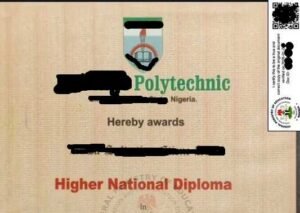
As you can see in the sample image above, the Ministry of Education will append a white sticker at the top right hand corner of a certified true copy of your academic result, certifying it to be a true and correct copy of the original document, indicating the date of verification, a document identification number, and a scannable QR code for validation. This proves beyond doubt that the degree certificate, diploma, WAEC, NECO, or any other academic or educational document as the case may be has been properly verified and authenticated by the Ministry of Education. This is the new standard, starting from January 2026.
Previous Verification Changes (October 2024):
Prior to the full e-verification rollout in 2025-2026, the Ministry of Education had already revised its verification procedures in October 2024. Rather than requiring students to obtain verification letters from their institutions, the Ministry of Education began directly contacting schools to verify results through official government channels. This eliminated the burden on students to personally coordinate verification with their alma maters.
The current e-verification system represents the complete digitization of this direct verification approach, with additional identity verification layers through NIN integration and electronic communication channels.
NERD and NCVS Integration:
The federal government’s Nigeria Education Repository and Databank (NERD) and National Credential Verification Service (NCVS) launched in 2025 now form the backbone of the Ministry of Education’s e-verification system. All federal ministries, departments, agencies, and institutions use NCVS to verify academic qualifications before confirming appointments or processing authentication requests.
Under this integrated system, authenticated academic documents now receive National Credential Numbers (NCN) and unique security codes linked to verified records in the NERD database. This digital verification infrastructure operates alongside traditional Ministry of Foreign Affairs authentication stamps, providing an additional layer of credential verification that foreign institutions can access electronically.
Foreign universities, immigration authorities, and employers can now verify the authenticity of your authenticated Nigerian academic credentials by entering your NCN into the NCVS portal, instantly confirming that your documents are genuine and were properly authenticated by Nigerian government authorities.
Page-by-Page Authentication Remains Standard:
Despite the digital transformation, authentication of academic documents at both the Ministry of Education and Ministry of Foreign Affairs continues to be calculated on a page-by-page basis. For example, if you need to authenticate university transcripts spanning multiple pages, each individual page must be authenticated separately with corresponding fees applied to each page.
The Ministry of Education maintains primary responsibility to determine the authenticity of your degree certificate, WAEC results, NECO certificates, and other academic documents. After the Ministry of Education certifies your academic documents through their e-verification system, you then take them to the Ministry of Foreign Affairs for final authentication with the traditional government stamps and signatures that foreign authorities recognize.
Authentication of Other Nigerian Documents
Beyond the common documents discussed above, you may need to authenticate numerous other Nigerian certificates depending on your specific purposes abroad. Additional documents frequently requiring authentication include:
- Corporate Affairs Commission (CAC) certificates of incorporation and business registration documents
- Notarized contracts and commercial agreements
- Court affidavits for various purposes
- Letters of sponsorship for family reunification or student visas
- Medical reports and health certificates
- Declaration of assets and income statements
- Bank statements and financial documentation
- Power of attorney documents
- Professional certifications and trade certificates
Authentication of these documents by the Ministry of Foreign Affairs generally follows similar verification procedures to confirm their authenticity and legal status before official government stamps and signatures are applied.
Critical Embassy-Specific Requirements You Must Know
If you need to authenticate documents in Nigeria for use abroad, always make thorough inquiries with your destination country’s embassy in Nigeria before beginning the authentication process. Different embassies maintain varying requirements beyond standard Ministry of Foreign Affairs authentication, and failing to meet these embassy-specific prerequisites results in rejected applications even when documents are properly authenticated.
For example, the Italian Embassy in Nigeria typically requires the authentication receipt issued by the Ministry of Foreign Affairs in addition to the authenticated documents themselves for legalization of Italy-bound documents. You must present both the receipt and authenticated documents together when dealing with Italian consular services.
For individuals traveling to Poland, United Arab Emirates (UAE), Malaysia, Czech Republic, and India for studies, the respective embassies typically require what is known as a Letter of Eligibility along with authenticated academic documents. The Letter of Eligibility is issued by the Ministry of Education as part of their certificate attestation process. You must obtain the Letter of Eligibility from the Ministry of Education first, then authenticate this letter alongside your degree certificate and other academic documents at the Ministry of Foreign Affairs.
Some countries require authentication of original documents only and will not accept authenticated photocopies, while others accept authenticated photocopies rather than originals. The UAE, Netherlands, Finland, France, Germany, Italy, and Qatar typically insist on authentication of original certificates, whereas South Africa and some other countries may accept authenticated photocopies. Always confirm these requirements with the specific embassy before authentication to avoid expensive mistakes.
Professional Document Authentication Services in Nigeria
We provide highly reliable authentication services for individuals and organizations who need to authenticate documents in Nigeria but face challenges with distance, time constraints, or navigating unfamiliar bureaucratic procedures.
Whether you are based outside Abuja, living abroad entirely, or simply value your time too highly to personally manage the authentication process, our document processing support team can handle everything on your behalf from start to finish.
The new e-verification requirements at the Ministry of Education add an additional layer of complexity to academic document authentication. Our team stays current with all procedural changes and can efficiently navigate the digital verification system while ensuring all your identification documents meet the ministry’s requirements.
Our clients across Nigeria and the diaspora consistently value the promptness, reliability, and transparency with which we execute document authentication services. We provide regular updates throughout the process and facilitate secure delivery of authenticated documents to your location anywhere in the world.
For more information about our authentication and legalization services, or if you need professional support with any document authentication requirements, please contact us.